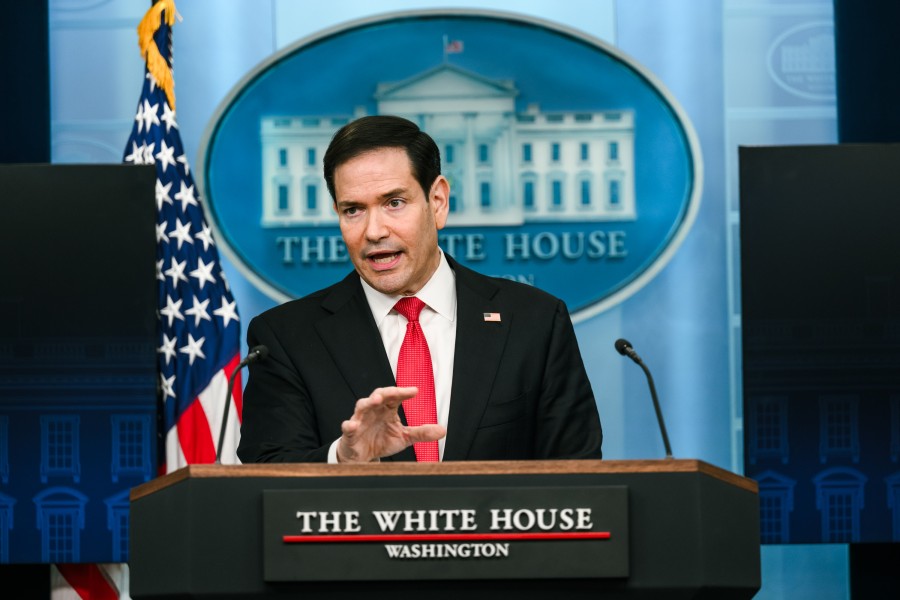
In a bid to address regional concerns, US Secretary of State Marco Rubio has initiated discussions with Gulf allies regarding a proposed $300 billion Iran reconstruction fund. The primary concern among these regional partners is the potential for the funds to inadvertently bolster Tehran’s military capabilities, raising alarms over regional security dynamics.
Upon his arrival in Abu Dhabi, Rubio engaged in talks centered on a recently brokered agreement intended to resolve the prolonged US-Israel conflict with Iran. He emphasized that the apprehensions surrounding the deal, alongside other unresolved matters, would be central to his dialogues with Gulf leaders. The reconstruction fund proposal has sparked significant debate among US allies, particularly due to fears that Iran might channel this financial aid into enhancing its defense infrastructure.
Among the critical issues for Gulf nations is the agreement’s failure to address Iran’s ballistic missile program, which remains a point of contention. Countries like the United Arab Emirates and Kuwait, which host key US military installations and have experienced attacks during the conflict, have expressed security concerns. These nations are seeking stronger assurances against potential future threats.
Rubio’s diplomatic efforts are part of a broader strategy by Washington to sustain backing for the agreement while simultaneously addressing the criticisms emerging from regional partners and some US lawmakers. The need to balance support for the peace efforts with the security concerns of Gulf allies is a delicate undertaking, as these leaders, who initially endorsed the conflict resolution efforts, continue to scrutinize the terms of the agreement with caution.