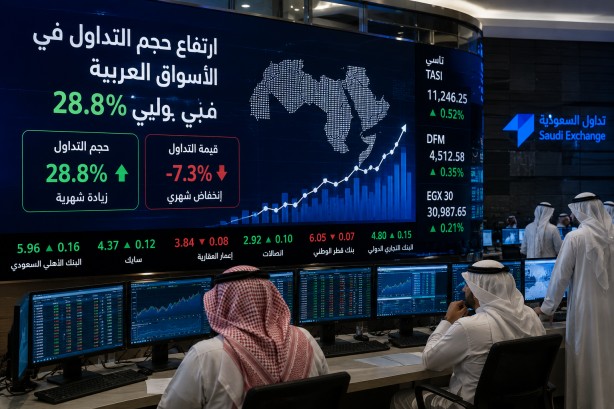
The month of July saw a notable surge in trading activity across Arab stock markets, with the volume of shares traded increasing by 28.82% compared to June. This upturn in trading volume brought the total to 261.86 billion shares, up from 203.27 billion in the previous month. The primary contributors to this increase were exchanges in Iraq, followed by Egypt, highlighting a regional boost in market activity.
Despite this rise in trading volume, the overall value of transactions saw a decline, dropping 16.82% to $90.24 billion in July from $108.48 billion in June. The fall in transaction values was observed across several key markets, including Egypt, Saudi Arabia, Dubai, Abu Dhabi, and Kuwait, suggesting a complex landscape of trading where increased activity did not necessarily translate to higher transaction values.
Performance across regional stock markets was varied, with Egypt’s EGX30 index emerging as a standout performer, posting a gain of 5.85% over the month. This contrasted with mixed results in other regional exchanges, reflecting a diverse set of factors influencing the performance of individual markets within the broader Arab region.
The aggregate market capitalization of Arab stock exchanges remained relatively stable during this period, with a slight increase of 0.06%, bringing the total to approximately $4.31 trillion. This stability in market capitalization, despite fluctuations in trading volumes and transaction values, underscores the resilience and complexity of the region’s financial markets.
Overall, these figures point to a dynamic period of trading within Arab stock markets, characterized by heightened activity levels, yet tempered by lower transaction values and varied market performances. The developments in July provide insight into the ongoing shifts and trends within these markets, offering a snapshot of the current economic landscape in the region.