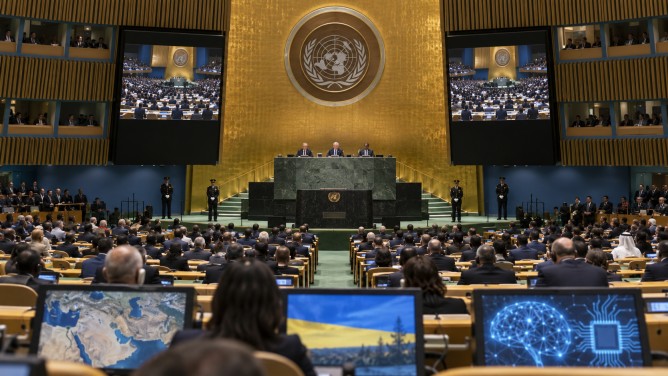
The 81st United Nations General Assembly in New York has significant implications for international diplomacy, with pressing global issues such as conflicts in the Middle East and Ukraine, as well as the rapid advancement of artificial intelligence, taking center stage. These discussions hold the potential to influence global security, energy supplies, and technological governance, making the outcomes of these meetings crucial for international stability and cooperation.
World leaders, including US President Donald Trump and Ukrainian President Volodymyr Zelenskyy, are converging at the UN headquarters, highlighting the assembly’s role as a pivotal forum for diplomatic engagement. Zelenskyy’s planned meeting with Trump underscores the ongoing focus on the Ukraine conflict, which continues to impact civilian lives and global food and energy security. Meanwhile, Russia’s role as a permanent member of the UN Security Council remains a contentious point affecting the body’s response capabilities.
The Middle East remains a critical area of concern, with regional security and international diplomacy heavily influenced by the ongoing conflict involving Iran. The presence of Iranian President Masoud Pezeshkian and Israeli Prime Minister Benjamin Netanyahu at the assembly underlines the importance of dialogue and potential resolution strategies for these enduring issues.
As artificial intelligence rapidly evolves, UN Secretary-General António Guterres has called for robust international cooperation and the establishment of common safeguards. The assembly provides a platform for discussing the future of AI governance, reflecting the urgency of aligning technological advancements with ethical and security standards.
Financial pressures on the United Nations add another layer of complexity to the assembly’s agenda. The recent $725 million payment by the United States to meet its UN obligations has temporarily alleviated concerns over its voting rights within the General Assembly. However, the call for reforms and spending reductions points to a broader conversation about the UN’s capacity to address global crises efficiently.
With Secretary-General Guterres set to leave office in 2026, the leadership transition looms over the current session, potentially shaping the direction of the UN’s future initiatives and priorities. As leaders gather for this critical assembly, their discussions and decisions will reverberate across international borders, impacting global cooperation in tackling some of the most pressing challenges of our time.