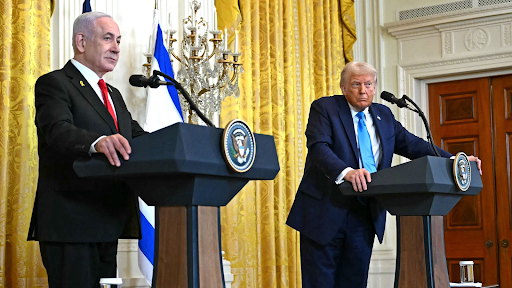
The central question for Hamas as it considers the US peace plan is whether the immense promise of aid and reconstruction for Gaza can outweigh the demand for its own surrender. President Donald Trump’s proposal has carefully structured this trade-off, hoping the humanitarian incentive will be too powerful for the group to refuse.
The plan offers a complete transformation of the situation on the ground. An end to the fighting that has killed over 66,000 people, the withdrawal of Israeli troops, and, most importantly, a massive, internationally-funded effort to rebuild Gaza and feed its people. For a population on the brink of collapse, this is an offer of salvation.
However, accessing this salvation requires Hamas to accept its own political death. The demand to disarm and be barred from governing is a call for the group to abandon its core identity and its raison d’être. This is a formidable obstacle for a movement built on the principle of armed resistance.
The United States and its international partners are betting that the scale of the humanitarian crisis has reached a point where even a hardened militant group cannot justify continued conflict. They hope that the pressure from a suffering populace, combined with diplomatic isolation, will force Hamas’s leadership to make a pragmatic choice.
The next few days will reveal Hamas’s answer. The world will see if the tangible promise of a rebuilt Gaza and an end to starvation is a strong enough lure to achieve what years of conflict could not: the surrender of Hamas.