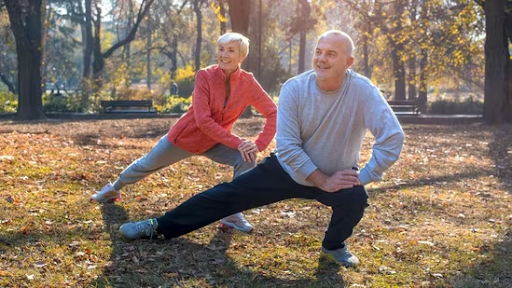
In a fitness culture often obsessed with intensity and strain, one movement educator offers a compelling counter-narrative based on thirty-five years of personal practice. His approach demonstrates that low-impact exercise, when properly designed and executed, can deliver profound benefits for mature adults without the joint stress and recovery demands of high-intensity alternatives.
The technique centers on understanding and utilizing elastic rebound—the springlike properties of ligaments, tendons, and fascia. Starting from a stable stance with feet at shoulder width, practitioners learn a specific bouncing motion through the knees that relies on dropping body weight and allowing elastic tissues to provide the return force. This creates rhythmic movement that is gentle on joints while still providing meaningful physical stimulus.
The low-impact nature becomes especially important as bodies age and joint health becomes a priority. Traditional high-impact exercises, while effective for certain populations, can accelerate wear on cartilage and create inflammation in sensitive joints. The elastic rebound approach protects joints by avoiding harsh impacts while still mobilizing them through beneficial ranges of motion. The bouncing motion remains fluid and continuous rather than jarring or abrupt.
Despite its gentle nature, the practice delivers substantial benefits as it evolves into full-body integration. When arms incorporate into the rhythm, the spine moves in waves, and breathing synchronizes automatically, practitioners engage multiple body systems simultaneously. Circulation improves as blood flows more efficiently throughout the body. Joint mobility is maintained or enhanced through gentle mobilization. Coordination and balance improve through the integration of multiple body segments into unified movement.
The sustainability factor cannot be overstated. Many exercise programs designed for older adults prove difficult to maintain long-term because they either lack effectiveness or prove too demanding. This technique occupies an optimal middle ground—effective enough to provide real benefits, gentle enough to be practiced frequently without excessive fatigue or recovery needs. For mature adults seeking a practice they can maintain for years or decades, this represents an invaluable approach to sustained physical wellness.