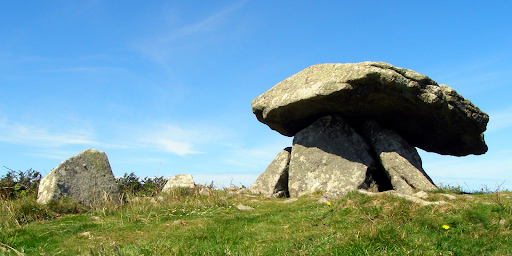
Beneath the mystical and ceremonial aspects of Cornwall’s prehistoric monuments lies sophisticated mathematical understanding. The precise alignments, calculated distances, and geometric relationships between sites reveal that Neolithic communities possessed advanced knowledge of practical geometry and applied it systematically to monument construction and landscape design.
Astronomical alignments required geometric calculations to position monuments correctly. Determining where to place Chûn Quoit so observers would see winter solstice sunset precisely over Carn Kenidjack demanded understanding triangulation principles. Builders needed to calculate relationships between observer position, landmark position, and solar position at specific times—fundamentally geometric problems solved without modern instruments.
Angular measurements governed how monuments marked celestial events. The sun’s position along the horizon could be expressed as angles from cardinal directions. Creating alignments meant positioning monuments so specific angles would coincide with astronomical events. This required ability to measure or estimate angles accurately using techniques that remain subjects of archaeological investigation.
Distance calculations influenced monument positioning and relationships. If multiple sites needed to remain intervisible or create coordinated observation networks, builders needed methods for judging appropriate spacing. Landscape topography complicated these calculations, requiring adjustment for elevation differences and terrain obstacles that affected sight lines.
Circle construction at sites like Tregeseal demonstrates geometric knowledge about radius, diameter, and circumference relationships. Creating regular circles required understanding that all points on the perimeter should maintain equal distance from center points. Achieving this without modern measuring tools suggests techniques involving cords or other simple implements used with geometric precision.
Proportional relationships may have governed monument dimensions. Some researchers propose that Neolithic builders used consistent measurement units or maintained specific proportional relationships between monument features. These regularities, if confirmed, would demonstrate systematic application of mathematical principles to ensure aesthetic harmony and possibly encode symbolic meanings through numeric relationships.
The Kenidjack holed stones’ spacing and aperture sizes may reflect geometric calculations about sunlight angles and shadow patterns. If these stones functioned as solar calendars, their design required understanding how changing sun positions would create specific beam patterns—problems involving geometric reasoning about light propagation and shadow formation.
Modern investigation of these geometric mysteries combines archaeological survey with mathematical analysis. Precise measurements of monument positions, orientations, and dimensions provide data for calculating alignment accuracies and testing hypotheses about geometric principles. Archaeoastronomer Carolyn Kennett’s work incorporates geometric analysis to understand how sites functioned astronomically.
Contemporary appreciation for prehistoric geometric knowledge comes through both intellectual understanding and experiential recognition. Witnessing the precision of astronomical alignments creates intuitive appreciation for the mathematical sophistication required to achieve such accuracy. The Montol festival, while primarily ceremon ial, occurs in landscapes where geometric principles remain embedded in monument positions—maintaining connections to mathematical mysteries that ancient peoples mastered and applied to creating Cornwall’s remarkable prehistoric monuments.